

Computer Vision · Video Analytics · System Architecture
1. From Detection Demo to Video Intelligence
Running an object detector on a recorded video is a useful starting point. Production video analytics must handle hours or days of continuous streams, intermittent cameras, scene changes, false alarms, operational dashboards, and deployment constraints.
A reusable video analytics platform should turn camera observations into structured, auditable events. For AIPractix, this area represents a natural architectural extension of Face AI and broader computer vision expertise; the discussion below is a reference design, not a claim that every module is already shipped in a product.
2. Model the Processing Stages
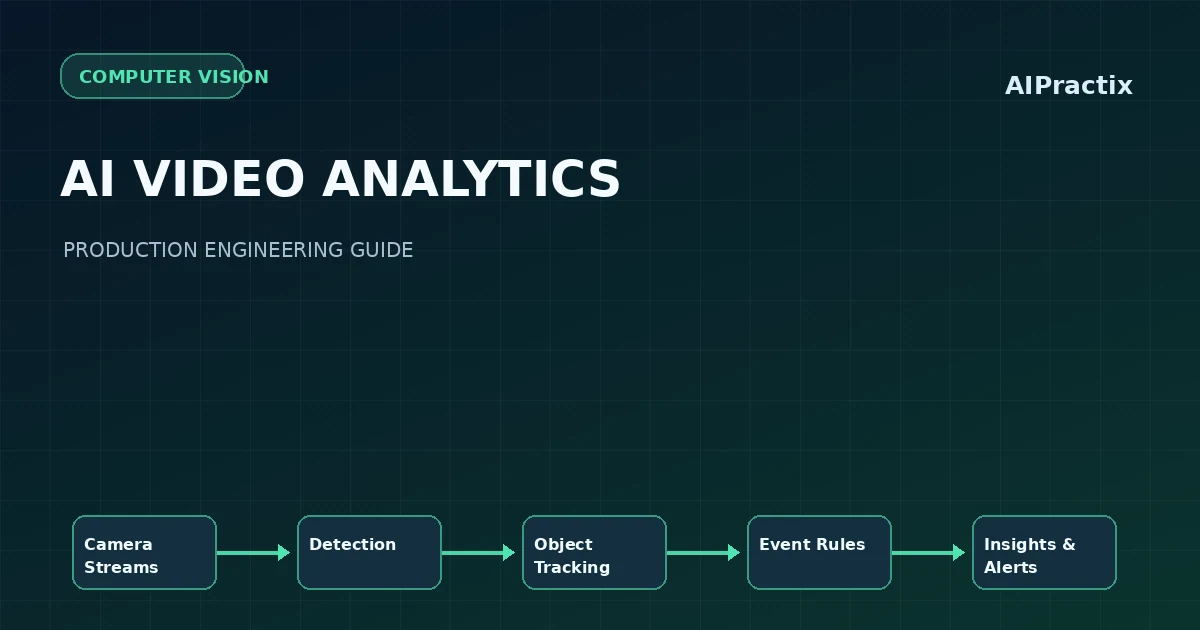
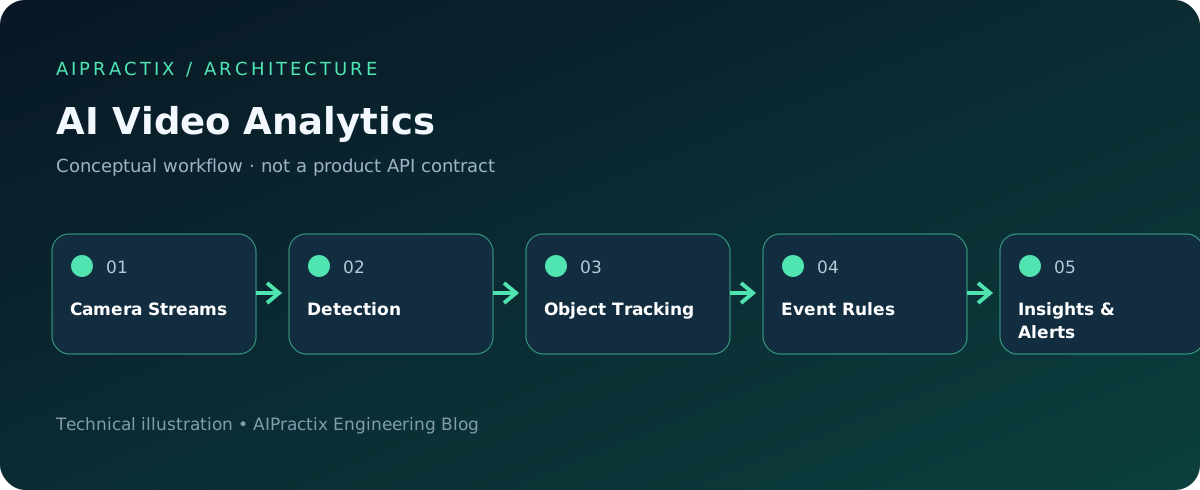
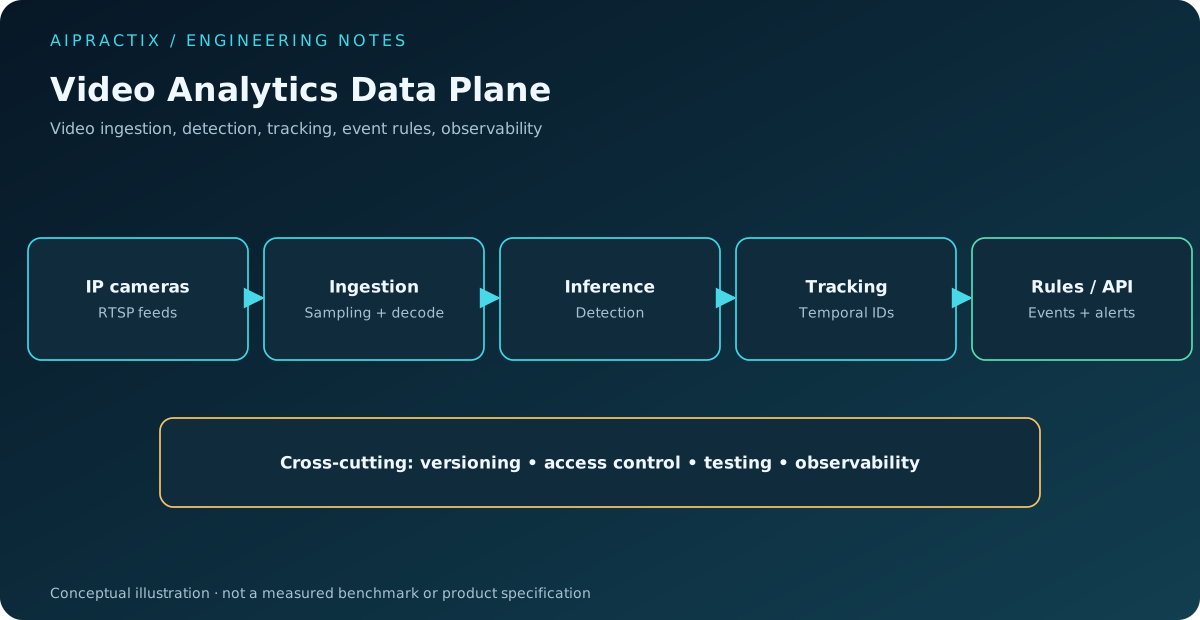
A practical pipeline separates stream transport, decoding, model inference, temporal processing, event rules, and delivery.
This architecture helps isolate failures and select different scaling strategies. Video decoding can be resource-intensive even when the AI models are relatively lightweight.
3. Treat Cameras as Unreliable Inputs
Real streams disconnect, change frame rate, lose timestamps, produce corrupted frames, or restart at unexpected moments. Build reconnection behavior, backoff, source health metrics, and frame timestamp handling into the ingestion service.
Do not confuse camera availability with analytics availability. A stream can appear connected while producing stale frames. Monitoring should detect processing lag and missing fresh observations, not just socket state.
4. Separate Object Detection From Tracking
A detector predicts objects in individual frames. A tracker associates observations through time and assigns temporary track identifiers. Tracking helps answer questions such as whether a person entered a zone, how long a vehicle stayed, or whether an object crossed a line.
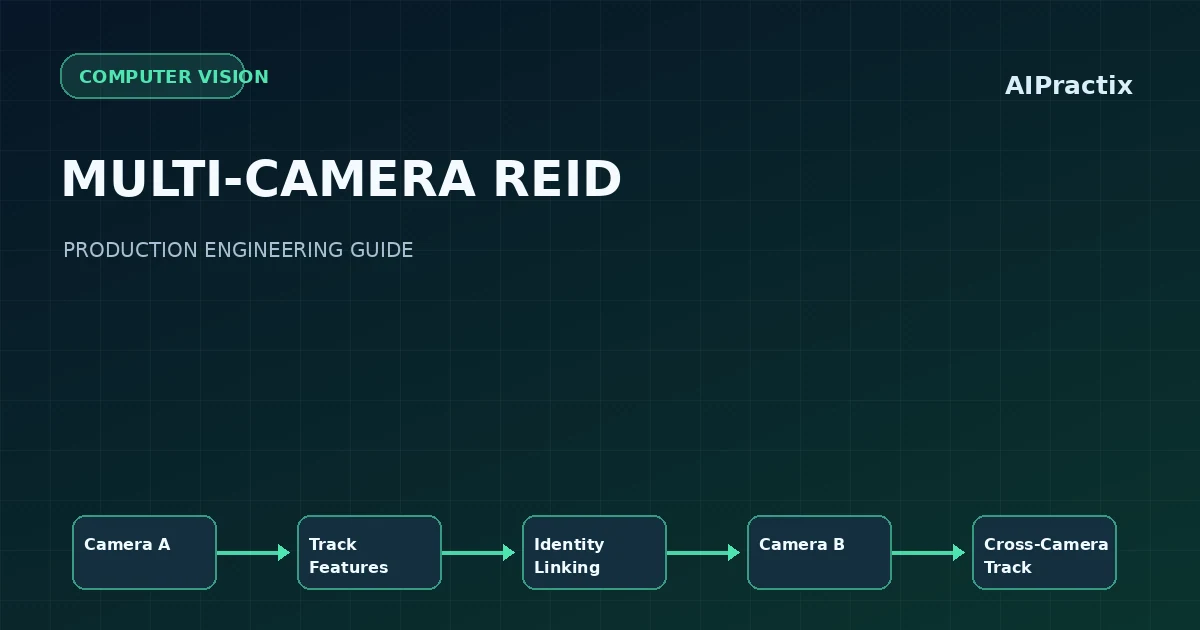
Tracking IDs are generally session-local and not permanent identities. Camera movement, occlusion, crowded scenes, and missed detections can cause ID switches. Avoid treating a track number as an authenticated identity.
5. Turn Observations Into Rules
Business users often need events rather than raw bounding boxes. Example rules include an object entering a restricted zone, a queue exceeding a threshold, a safety condition persisting for multiple frames, or a count crossing a defined boundary.
A rule engine should consider persistence, hysteresis, cooldown periods, and confidence. Otherwise, one noisy detector output may generate repeated alarms. Store which model version and rule revision produced an event so results can be audited later.
6. Choose Edge, Server, or Hybrid Deployment
Edge inference can reduce video transmission and enable localized operation. A central server simplifies model rollouts and pooled computation. Hybrid approaches can analyze streams near the source while forwarding only permitted event metadata for centralized reporting.
The best topology depends on camera count, resolution, frame sampling rate, network budget, hardware, data governance, and alert-latency targets. It should be tested with real video rather than synthetic peak-throughput assumptions.
7. Design the Data Model Carefully
Store structured events with camera ID, time interval, event type, relevant confidence, rule version, and links to authorized evidence where policy permits. Separate short-lived raw video storage from long-lived operational metrics.
Video may capture employees, visitors, and bystanders. Restrict viewing, retention, export, and face processing according to the deployment's lawful purpose and applicable requirements. Not every analytics use case needs biometric identification.
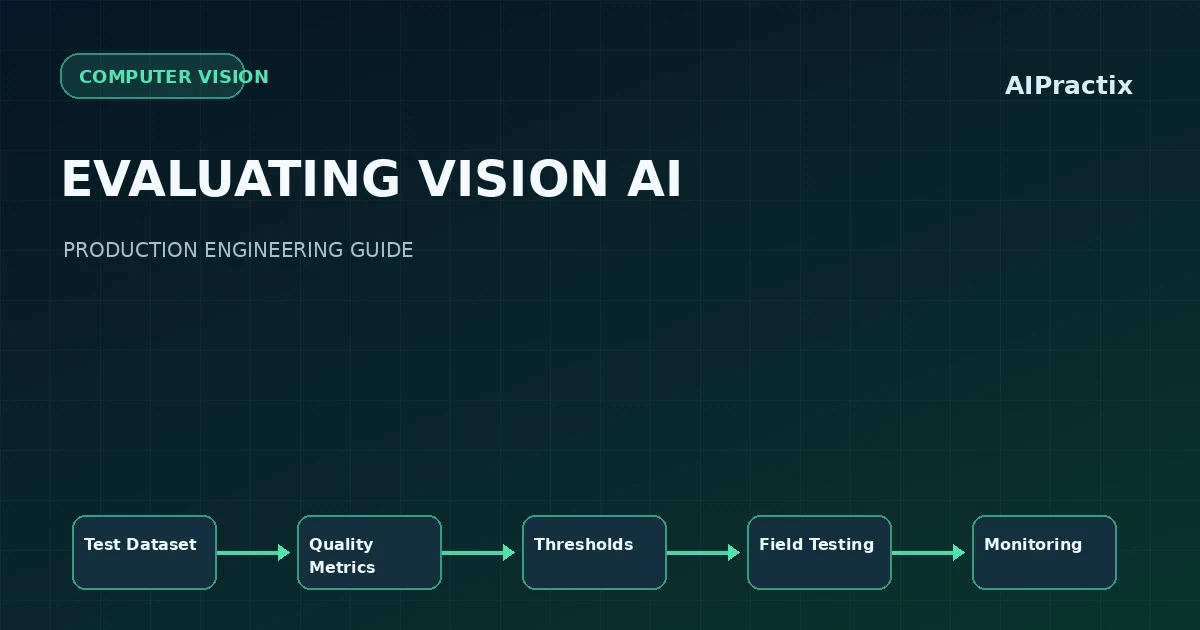
8. Evaluate Beyond mAP
Detection mAP does not measure the usefulness of an alerting product. Evaluate event precision and recall, false alerts per camera-day, time-to-detection, tracker fragmentation, processing lag, stream uptime, and human review burden.
For counting applications, compare aggregated counts with representative ground truth. For safety scenarios, define acceptable miss rates and escalation requirements before deployment. Re-test after changes in camera placement or scene configuration.
9. Platform Extensibility
A well-designed analytics platform allows independent model plugins and business rules. Common components—stream management, scheduling, identity and access control, event persistence, monitoring, and APIs—should be reused across use cases.
This makes it possible to add capabilities without building a separate operational stack for every camera analytics requirement. Extensibility, however, should not compromise isolation or quality assurance.
10. Conclusion
The value of AI video analytics comes from reliably transforming continuous visual input into useful, defensible events. A production-ready architecture must solve stream reliability, temporal reasoning, rule management, deployment, observability, and privacy alongside model inference.