

Practical AI does not have to begin in a major technology hub.
When people think about the Mekong Delta in southern Vietnam, they often picture rice fields, rivers, fruit gardens, and a way of life shaped by the land and water.
They do not always picture a team building face recognition engines, computer vision SDKs, or production AI systems.
But why not?
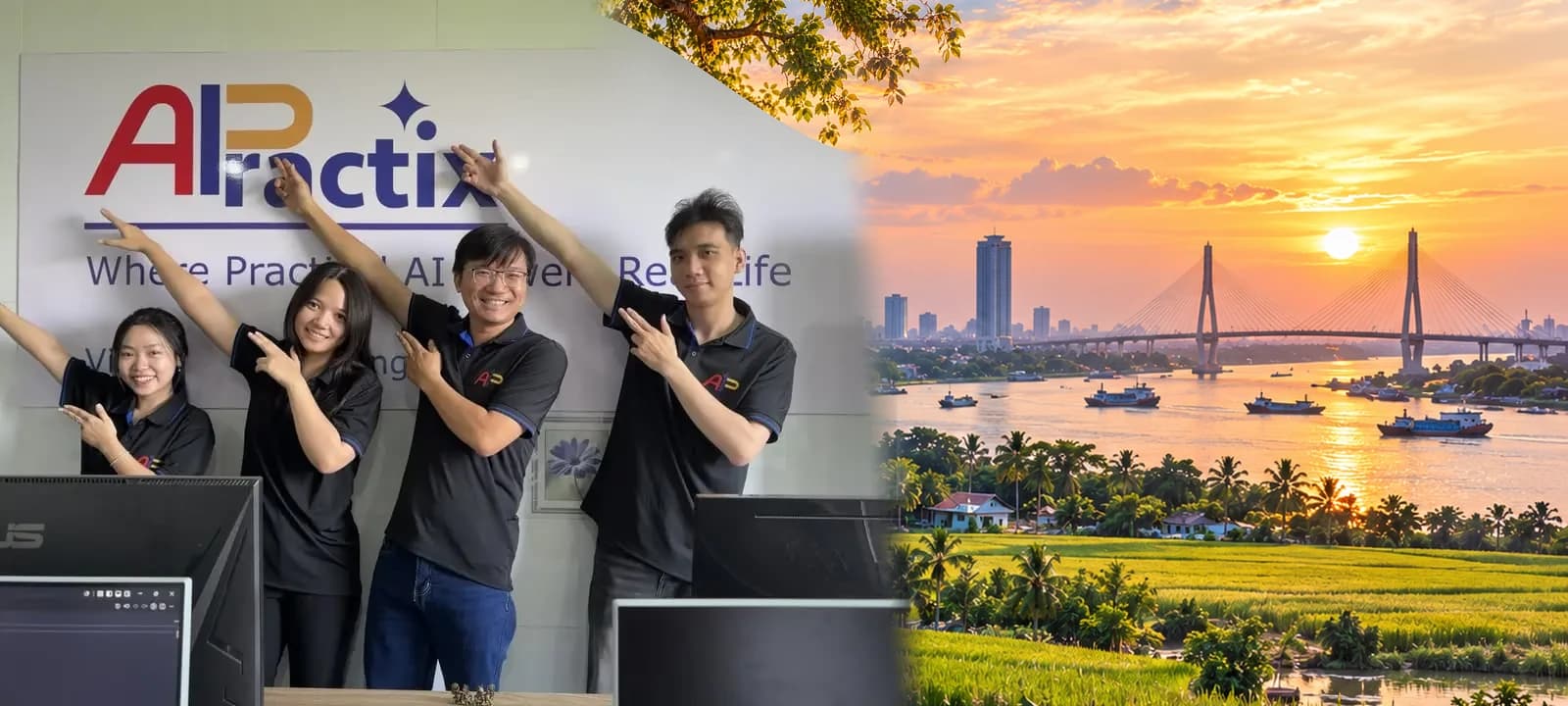
We are AIPractix, an AI engineering company rooted in Can Tho, in Vietnam's Mekong Delta. We build practical AI technology and collaborate with businesses that want to integrate AI into real products and workflows.
This is a short introduction to where we come from, what we build, and the kind of partners we hope to work with.
1. Why build an AI company in the Mekong Delta?
Technology talent is not limited to large cities. Neither are difficult problems worth solving.
Building from Can Tho is a deliberate choice: we value a sustainable working environment, a focused engineering team, and the freedom to develop technology that can serve customers far beyond our immediate location.
Our ambition is not to make AI a novelty in the Mekong Delta. It is to show that serious, dependable AI engineering can be built here—with the same attention to accuracy, performance, security, and integration that international customers expect.
We believe location can be part of our identity without limiting our market.
2. What does “practical AI” mean to us?
We are interested in what happens after a model performs well in a notebook.
Can it run efficiently on the customer's device or server? Can a software team integrate it without rewriting its application? How is sensitive data handled? What happens when the lighting changes, a model is upgraded, or the internet connection disappears?
Those questions matter as much as benchmark accuracy.
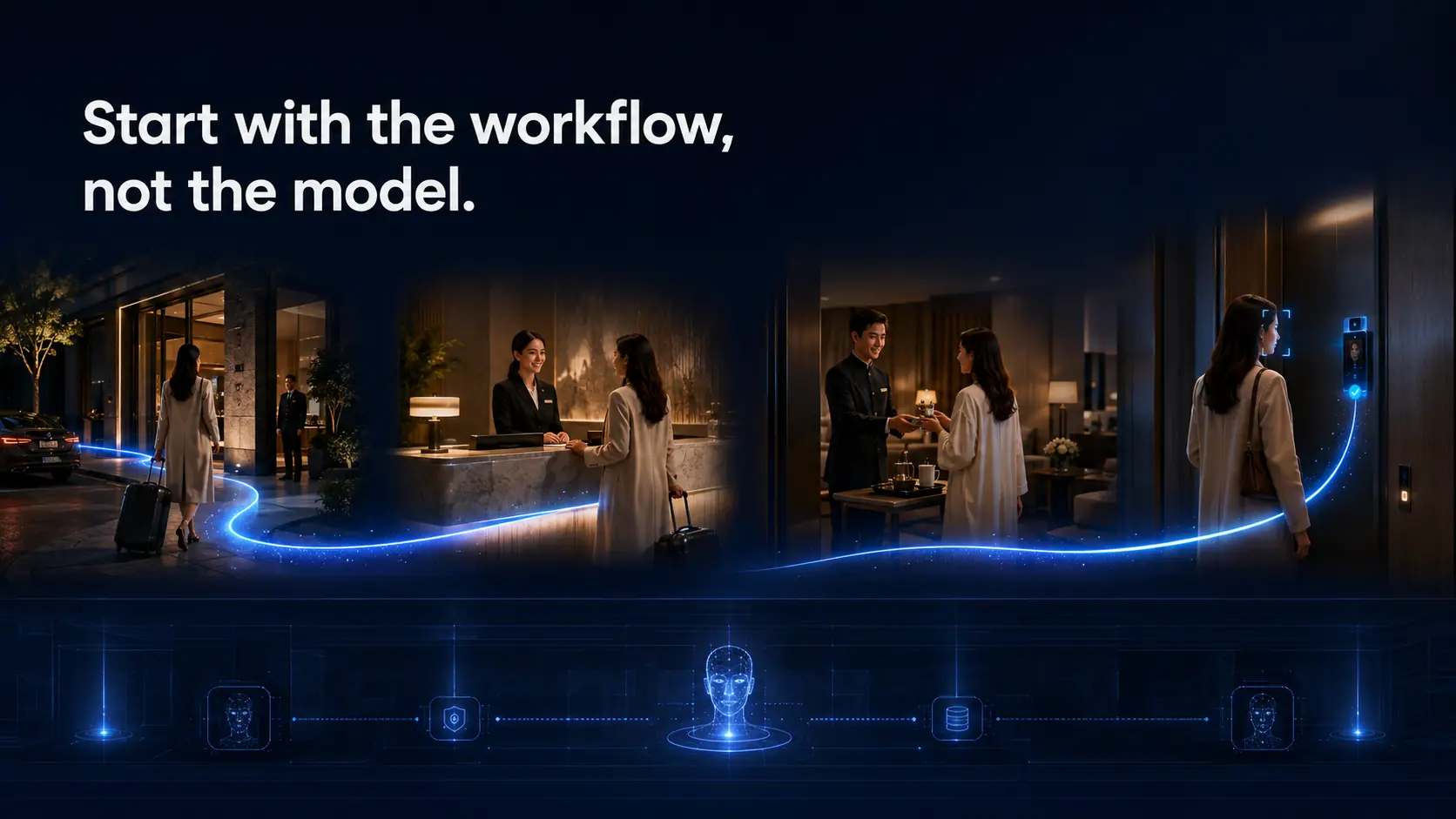
At AIPractix, our engineering mindset begins with the business workflow, then works backward to the models, interfaces, infrastructure, and operational requirements.
Sometimes the right answer is a reusable SDK. Sometimes it is an internal AI server. Sometimes the problem can be solved with simpler automation and does not need a new AI model at all.
We prefer a solution that works over a demo that only looks impressive.
3. What we build at AIPractix
Our work focuses on applied AI engineering, especially computer vision and related intelligent systems.
Face recognition and AI SDK development
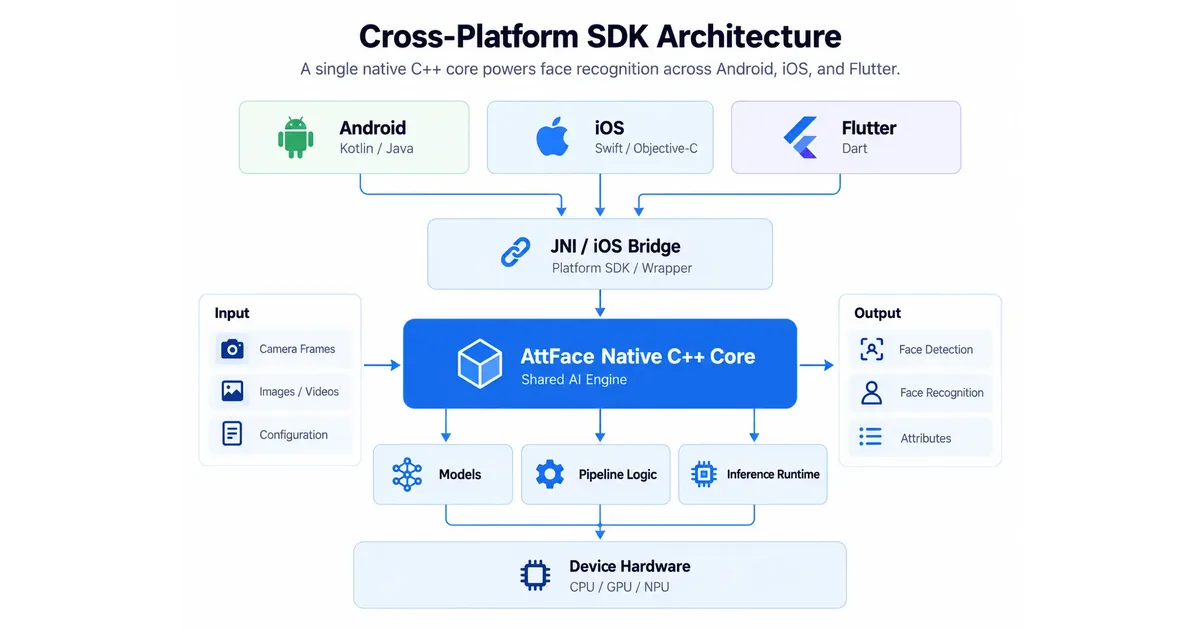
Through AttFace, we develop reusable face analysis capabilities, including detection, recognition, liveness evaluation, quality checks, and mobile SDK integration.
The aim is to help other software teams adopt specialized face AI components instead of developing an entire recognition pipeline from scratch.
Custom computer vision systems
Some applications need more than an SDK: they require server-side inference, integration with databases and business services, deployment on private infrastructure, or operational monitoring.
We work on the engineering problems that connect AI models to usable systems, whether the deployment runs on a device, an internal server, or a hybrid architecture.
Visual search and intelligent event analysis
We also explore visual and semantic search, video understanding, and structured events generated from camera or learning environments.
These are areas of technology development and exploration, not a claim that every capability is a finished commercial product.
4. Local roots, international ways of working
Can Tho is our starting point, not the boundary of our work.
We want to collaborate with businesses in Can Tho and the Mekong Delta, as well as software companies and technology partners elsewhere in Vietnam, Japan, South Korea, and other markets.
Our founder's professional background includes years of engineering experience in international working environments, particularly projects connected to Japanese clients and teams.
That experience shaped an approach we value: clear requirements, careful integration, reliable delivery, and respect for long-term relationships.
We are especially interested in becoming a technology partner for companies that already understand their customers but need deeper AI engineering capability.
A good partnership does not have to mean a large outsourced team. It can begin with a feasibility study, a narrow proof of concept, an SDK integration, or a focused engineering engagement—and grow when the results justify it.
5. What can businesses in Can Tho and the Mekong Delta use AI for?
Different businesses face different constraints. The right starting point is a specific operational problem, not an industry buzzword.
For example, organizations may want to explore:
- Identity verification and attendance: integrating face analysis into an existing application or workflow.
- Camera and video analytics: turning selected observations into searchable information or operational events.
- Visual product search: helping users find visually similar products or objects.
- Document and workflow intelligence: reducing repetitive review or routing work when the available data supports automation.
- AI integration: adding a specialized AI component to software a company already sells or operates.
These are examples of potential applications, not claims about completed customer deployments in each industry.
For local organizations, working with an AI team familiar with the region can make early discovery and communication easier. For partners outside the region, remote-first technical collaboration remains equally possible.
6. What should you prepare before talking to an AI team?
You do not need to select a model or collect a perfect dataset before starting a conversation.
A useful first discussion can begin with four questions:
- What workflow is difficult today? Describe how people handle the task and what makes it slow, expensive, or unreliable.
- What information is available? Images, videos, records, business rules, or examples of past decisions may help assess feasibility.
- What outcome would make the project worthwhile? Time saved, improved consistency, reduced manual work, or a new product capability.
- What constraints matter? Privacy, integration, latency, budget, and where the system needs to operate.
A capable AI partner should help clarify uncertainties rather than expect the customer to arrive with a complete technical specification.
7. The kind of company we hope to build
We do not aspire to be the biggest AI company by headcount.
We want to build a focused engineering company with technology we understand deeply, products that continuously test our assumptions, and partnerships that create value over years rather than weeks.
That means continuing to invest in our core capabilities, documenting what we learn, and being honest about trade-offs and limitations.
We would like AIPractix to become a recognizable name for practical AI engineering from Can Tho and the Mekong Delta—trusted locally and capable of working internationally.
The rice fields are part of where we come from. They are not a limit on what we can build.
8. A hello—and an invitation
If you are searching for an AI development company in Can Tho, a computer vision team in Vietnam, or a long-term partner to integrate AI into your software, we would be glad to hear about the problem you are trying to solve.
You do not need a polished AI roadmap to begin. A real workflow, a clear question, and a willingness to explore practical options are enough for a first conversation.
Hello from the Mekong Delta. We are AIPractix.