

Face AI · Edge AI · Architecture
1. The Deployment Decision Matters
Two teams can choose the same face recognition model and still build radically different products. One runs inference inside a mobile application; the other sends authorized images to an internal server. Neither architecture is universally better.
The correct decision depends on expected traffic, gallery ownership, privacy constraints, hardware variability, update frequency, and connectivity. A useful assessment starts with the application's actual workflow, not a preference for the newest runtime.
2. Understand the Three Patterns
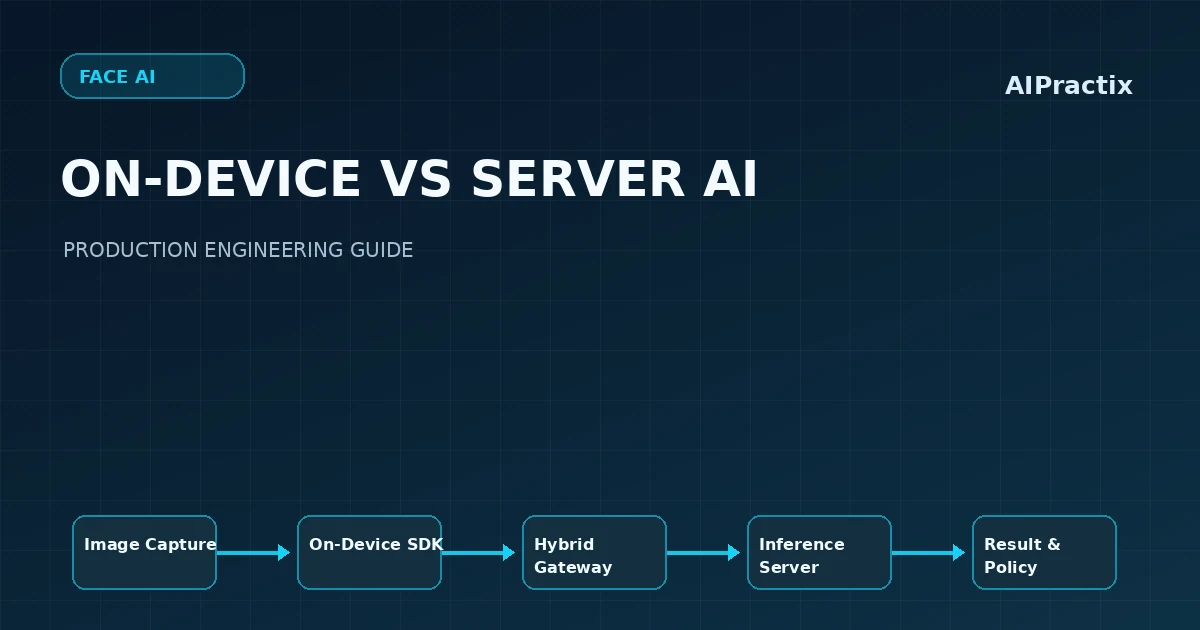
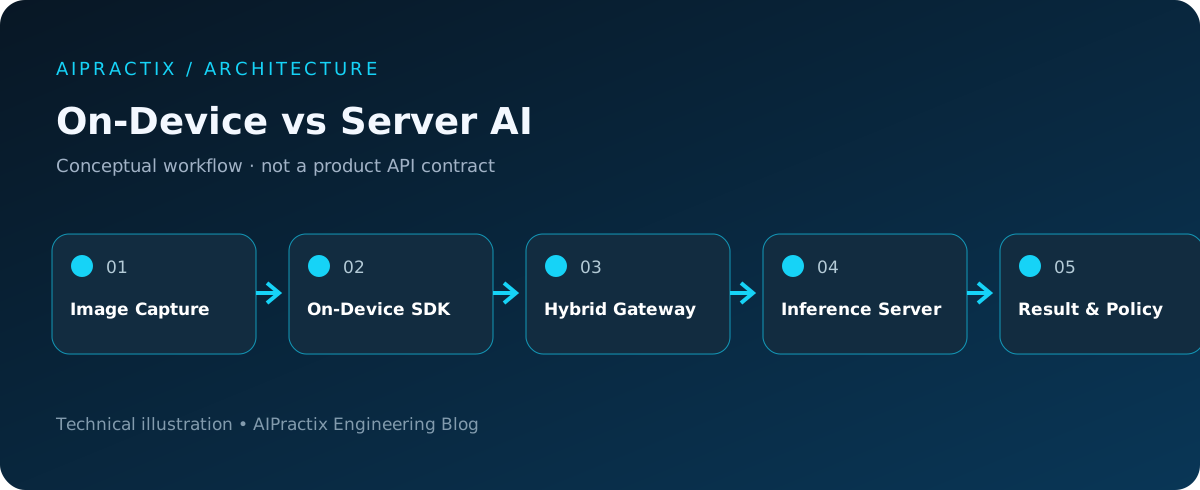
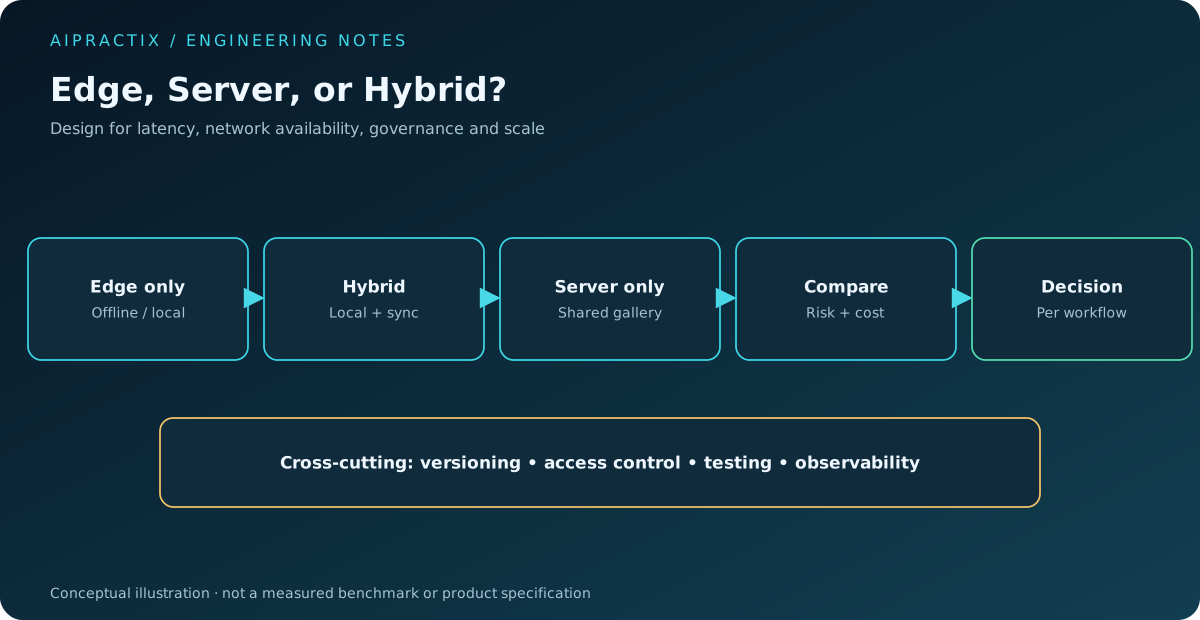
On-device systems perform most or all face analysis locally. Server-based systems transmit the necessary input to a controlled inference endpoint. Hybrid systems divide analysis and decisions across both sides—for example, local quality assessment and remote gallery search.
Each pattern introduces different trust boundaries. A local inference result is not automatically trustworthy to the backend, while a secure server does not eliminate risks in camera capture or network transmission.
3. Compare Key Trade-offs
| Dimension | On-device | Internal server | Hybrid |
|---|---|---|---|
| Network dependence | Potentially low | Usually higher | Workflow-dependent |
| Hardware variability | High across clients | More controlled | Shared |
| Model updates | Client release or delivery strategy | Centrally managed | Requires compatibility planning |
| Large shared gallery | More complex to synchronize | Natural fit | Often centralized |
| Input data movement | Can remain local | Crosses device-to-server boundary | Depends on partition |
| Operational cost | Distributed client resources | Server capacity and operations | Both |
These are tendencies, not guarantees. A badly optimized local model may feel slower than a well-run internal server on a fast network.
4. Latency Is an End-to-End Property
On-device latency includes camera capture, preprocessing, inference, search, and UI work. Server latency adds serialization, transport, queuing, remote inference, and response handling.
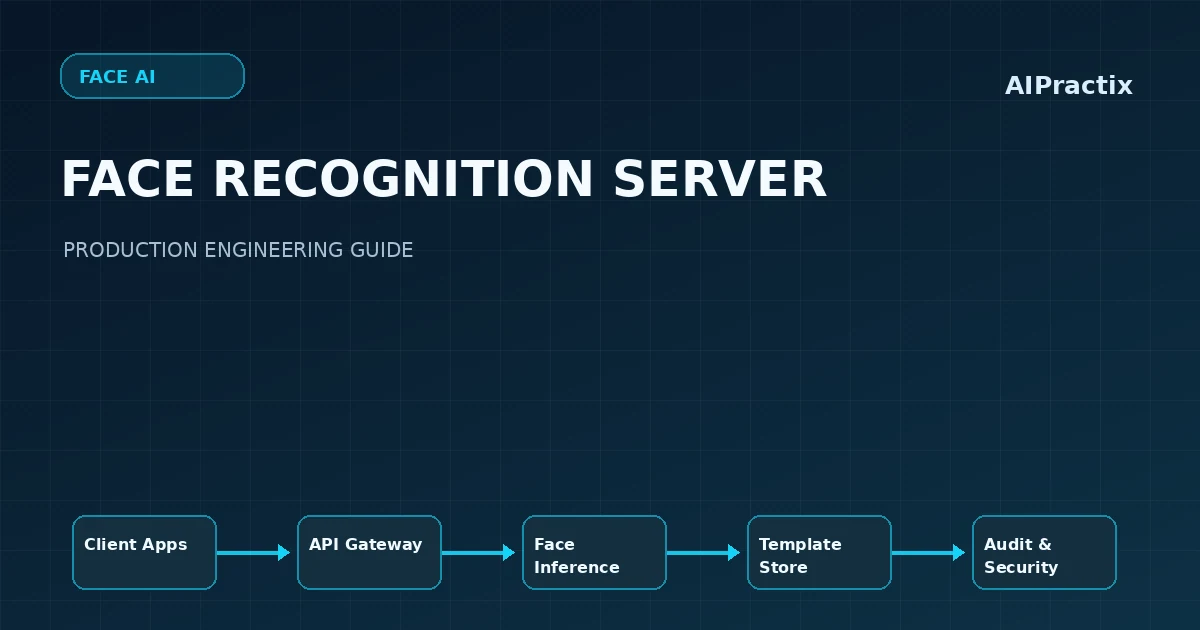
A simplified server path is:
Compare p95 interaction latency on representative devices and networks instead of comparing isolated model benchmark numbers. Test cold starts, sustained use, and peak concurrency.
5. Privacy Requires a Data-Flow Diagram
Local inference can reduce image transmission, but templates, logs, or identity decisions may still leave the device. Server inference can be deployed within an organization's network, but transport, retention, and administrative access still need controls.
Map each data class—raw frames, aligned faces, embeddings, identity IDs, device identifiers, and event logs—to its storage location, retention period, and authorized readers. Treat embeddings as sensitive biometric information.
6. Model Lifecycle and Version Compatibility
Central servers simplify coordinated updates to inference models. Mobile deployments face OS versions, device chipsets, application release schedules, and users who defer updates.
For hybrid systems, pay particular attention to embedding compatibility. A client sending version-two embeddings to a version-one gallery can cause silent accuracy degradation. Version identifiers and migration policies are core API contracts, not optional metadata.
7. Scaling and Total Cost
For high-volume mobile scenarios, local inference may reduce recurring server compute costs. However, device optimization, support, licensing, QA, and crash analysis add real engineering expense.
Server deployments centralize operations and can consolidate inference hardware, but require capacity planning, availability monitoring, storage, and network infrastructure. Estimate total cost over realistic workload patterns rather than extrapolating from a single device or one GPU benchmark.
8. Decision Examples
An offline attendance application may favor an on-device or hybrid workflow. A central identity service shared by many business applications may favor an internal server. A kiosk with a limited local gallery might operate entirely on-device, while a multi-site identification platform could require synchronized or centralized matching.
The architecture may evolve. Define clean interfaces and data ownership early so the system is not trapped by its first deployment choice.
9. An Architecture Review Checklist
Ask: Which operations must function offline? Where is the authoritative gallery? Who manages enrollments? How often do models change? What is the largest expected gallery? What does a false match cost? Which components are trusted? What happens when a device or server is compromised?
These questions surface more useful design constraints than a generic comparison of model frames per second.
10. Conclusion
On-device and server-based Face AI are complementary deployment options. A reusable engine, explicit version contracts, and measurable workflow policies make it possible to select—or combine—them according to customer needs. AIPractix approaches AttFace as an integration capability, not a one-size-fits-all infrastructure assumption.